

COVID19
7 MIN READ

Dignified regional cooperation is the need of the hour and self-reliance the major goal

Nepal’s future is in danger in the post-corona world. The long recession caused by the coronavirus will hit the country hard and the government will face several challenges to protect the country’s economy and social order.
Returnee migrant workers, young people unable to go abroad for work and small business owners who can’t reopen will increase the country’s unemployment rate, which was estimated at 11.4 percent by the Labor Force Survey 2018-19. The Economist recently reported that rich countries will have a large debt burden to fix post-corona. As countries struggle with the economic costs of the shutdown, the least-developed will suffer more.
Some researchers in the UK and the US have recommended opening parts of the economy by allowing the young who are least likely to have severe complications from the virus to return to work while isolating the population at risk. They say keeping people indoors also has human costs to society. Sweden, a country that chose not to go into full lockdown to combat the effects of the pandemic, has projected that it will reach herd immunity over the next few weeks.
The possibility of lax lockdown measures globally looks increasingly likely over the next few months. However, hibernating an economy isn’t possible, as some politicians have suggested. The economy can’t be brought back from sleep to its original state as many variables have changed. A chain reaction due to closure of businesses is bound to wreak havoc across different industries. For example, a closed restaurant may not have workers or supplies readily available to reopen. The global ports operator DP World has warned that it is uncertain when global trade will return to its previous capacity.
Moreover, cultural factors are at play. Historically, Nepalis aren’t very good at following government directives; the federal setup has come in handy to effectively enforce lockdown measures. Most young Nepalis also live with their parents, who fall in age brackets that are more at risk from the virus. Urban areas like Kathmandu, Pokhara and Nepalgunj have a significant portion of the working population living with older people. It’s a challenge getting the young back to work without putting the elderly at risk. The state will have to arrange for accomodation, health, transport to isolate either the workers or the elderly in order to progressively reopen the economy. There’s already a mental health crisis looming and the state is severely under-resourced to deal with it.
On the other hand, automation-based restructuring of businesses is set to gain pace as a result of businesses being forced to operate in lockdown conditions. The global demand for labour will consequently decrease, forcing Nepali workers to find alternatives at home. Locally, as industries take the next few years to arrive at pre-corona capacity and the state faces the burden of rising unemployment, many in Nepal’s rural areas will have to resort to agriculture, including cultivating crops and raising livestock, to combat hunger. The World Food Programme has warned that acute hunger will be the next big consequence of the pandemic as countries increasingly resort to protectionist measures in a bid to reduce its impact on citizens. There couldn’t be a better time to introduce modern urban agriculture systems to Nepal’s cities.
To minimize the effects of the crisis, Nepal must focus on mega-projects in agriculture through increased budget and FDI operations. However, irrigation and storage infrastructure will require some upgrades for the success of such projects. Immediate steps need to be taken. Besides, stalled national pride projects that have capacities to employ thousands need to be brought into operation with priority.
Crucially, small business owners forced to temporarily close their businesses in urban and rural areas will need financial support from the state to stay afloat, via delay in loan repayments and other subsidies. Tourism and the hotel industry will need significant help to stay operational. This alone won’t be enough as consumer demand decreases in the short-term, impacting revenue collection and the economy at large. A sizable fiscal stimulus will be needed, but the state must be restrained in its approach to counter inflation.
In addition, local industries will seek to adopt digitisation and automation sooner than hoped or planned. Education, health, banking and retail are sure to change in the ways they operate. Currently, digital banking and payment providers like eSewa have seen an increase in users, supported by relaxed rules from the government and the banking sector. While digitisation means more reach of the public towards services, it’s hardly an easy transition to follow through. Employees in those industries will need a massive skill upgrade and the state will need to adapt to their emerging needs. For example, digitisation of education means teachers, students, and schools with technological resources and skills that enable online education in a policy environment that supports it. There’s a steep learning curve here. Experts in the west have recommended sending K-12 kids to school and their young parents to work as they prepare to reopen their economies. That could be done in Nepal too.
The corporate and non-government sectors will have a financial and social motivation to step in to improve the industrial ecosystem. The case to strengthen manufacturing with a focus on consuming local has never been stronger. To that end, the state must improve the business environment for entrepreneurs from the ground-up. Existing policies have looked good on paper, but small entrepreneurs still face cumbersome bureaucratic procedures to get a loan approved; upskilling training has yet to materialise effectively.
Health, education and various other services should aim to serve consumers outside the borders by the end of this decade. A relatively less open economy that is more connected regionally than globally is a strong possibility worldwide as this crisis progresses. Nepal needs to change its priorities accordingly. The National Planning Commission must address these concerns in its post-corona policy and strategy report.
People leaving Kathmandu on foot and buses already signal towards a less-urbanised future than anticipated. Decentralisation in the operation of state is fast becoming a reality. Local levels will need to play their part and the centre must support them with required funds and autonomy. There’s no time for petty politics. Improving human resource and supply-chain management is necessary with the state being the major driver in providing policy, structural and financial support. Our already fragile governance mechanisms have been further exposed by the coronavirus and the only way out will be to face the challenge head-on.
While temporary relief may pour in for Nepal to deal with the effects of the virus, aid will not increase in proportion to the increase in spending required to build our future economy. The virus is already set to grow the government’s debt burden. Just last week, the World Bank projected a huge drop in our remittance revenue. Over the next few months, we should expect a significantly worse outlook than those numbers suggest. We can’t afford to rely on an import-based economy anymore. A more nationalistic sentiment than a globalised one has been the safe harbour for nations across the globe during this time and experts across the board agree that we're likely to see a stronghold of nationalism in the post-corona world. Dignified national cooperation and increased self-reliance will ensure our survival. Civic society, media and citizens must play a greater role in affecting decisions at the local levels of government.
There’s no magic pill to save us - we’re just going to have to start with analysing, fixing and remodeling our existing systems, enabling them to absorb economic shocks of similar magnitudes in the future. This pandemic is a good opportunity for the Nepali people to build back better.
:::::::::

Rubin Ghimire Rubin Ghimire is an economist and artist. He is the country founder at the Center for Humane Technology that advocates for humane tech ecosystems.



Opinions
6 min read
Angira’s death is one more example of brutality against Dalit bodies

COVID19
Features
2 min read
Even as health workers continue to sacrifice their lives in the line of duty, the government continues to turn a blind eye to their problems
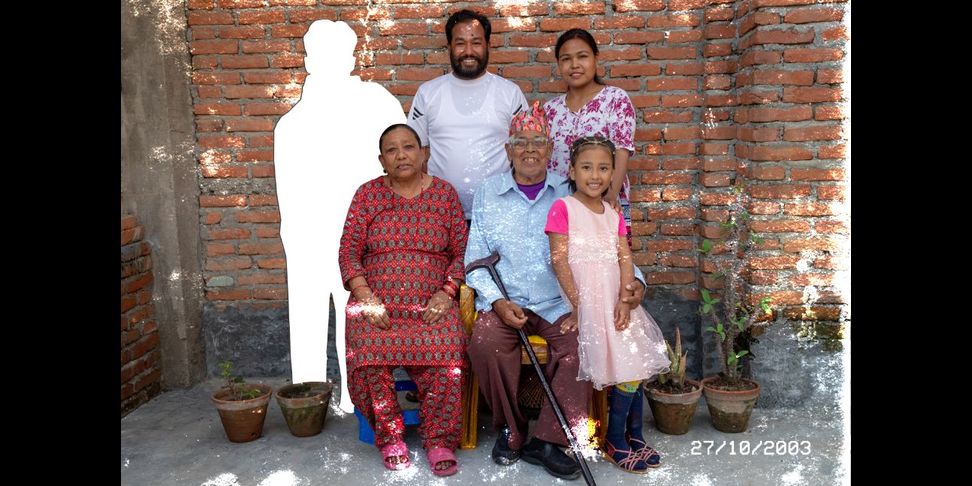
Photo Essays
4 min read
The coronavirus pandemic brought a faint hope for some that their family members who disappeared during the People’s War might finally return

COVID19
News
3 min read
A daily summary of Covid19 related developments that matter
Features
5 min read
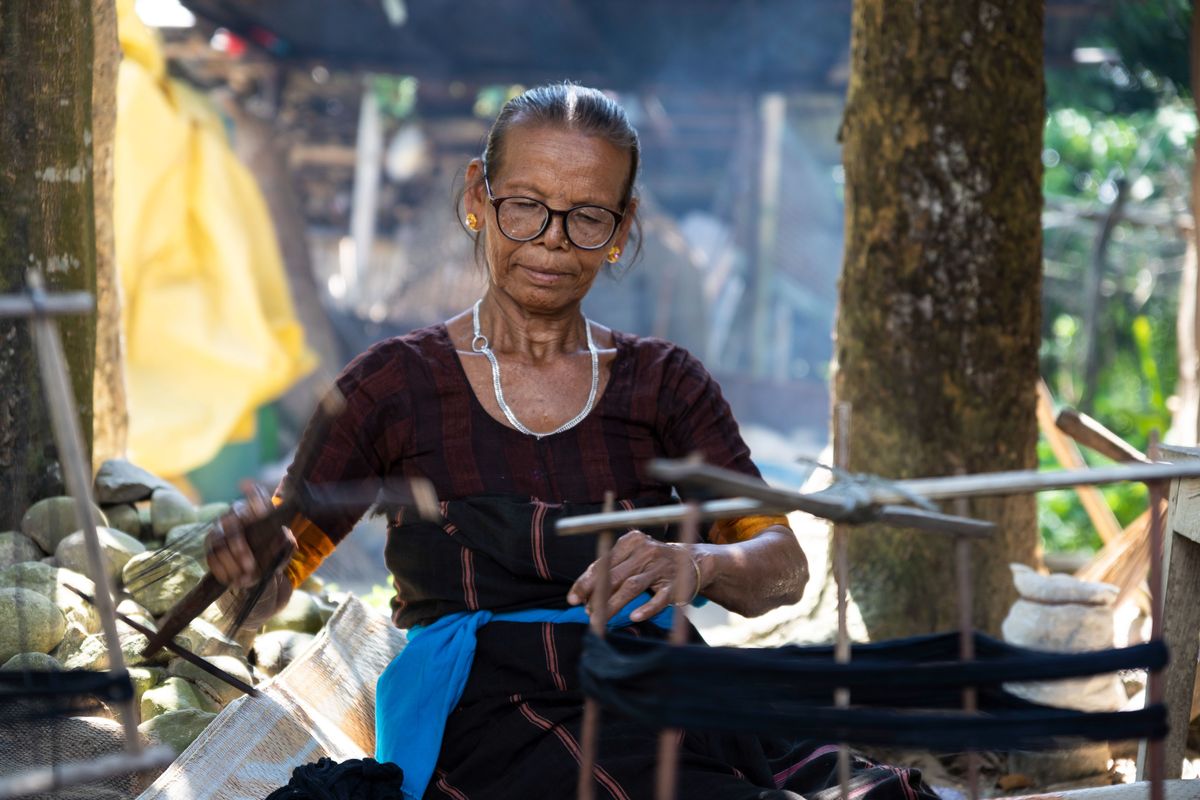
Sixty-five-year-old Chandra Kala Dhimal is one of the last few weavers from the indigenous Dhimal community still keeping traditional wooden weaving alive.

Interviews
3 min read
Interview with Kamala Roka Magar, first female Maoist guerilla.

Features
12 min read
For the ordinary residents of Nijgadh, the airport has already come—as the fear and uncertainty that now pervade the everyday, of being displaced and dispossessed
