

Explainers
6 MIN READ

Fact-checking PM's claims defending his government’s COVID-19 response and overall performance.

This article was originally published in South Asia Check – an independent, non-partisan, non-profit initiative by Panos South Asia, aiming to promote accuracy and accountability in public debate
Speaking on Janata Janna Chahanchhan talk show on Prime Times Television on August 29, Prime Minister KP Oli defended his government’s COVID-19 response and highlighted his government’s achievements in the last two and a half years. The one-hour 46-minute interview has been viewed more than 350,000 times until September 2, and is trending at number 6 in Nepal on YouTube in Nepal.
Among several claims made by Prime Minister Oli, South Asia Check has examined three.
“Currently, we are conducting 23,000 to 24,000 PCR [polymerase chain reaction] tests daily. This is not a small matter.”
At a daily press briefing a month ago, spokesman at the Ministry of Health and Population Dr Jageshwar Gautam said the government was working to enhance its capacity to conduct more than 18,000 PCR tests daily.
As per the latest data, over 13,000 PCR tests were carried out on August 26, the highest single day tests so far. About a month ago, on July 31, the government had recorded highest PCR tests (10768) till then. That record on PCR tests was broken on August 16 when a total of 12,247 tests were conducted.
Source: Ministry of Health and Population
Therefore, Oli’s claim about PCR tests is exaggerated.
“The government provides all necessary treatment to COVID-19 patients without distinguishing between rich and poor. The government bears the entire treatment costs. Isn’t this extraordinary? None of our neighboring countries have done this. They don’t have this kind of arrangement.”
Several Indian states have provided free medical treatment for COVID-19 patients. Indian state of Andhra Pradesh has announced that designated hospitals will treat COVID-19 patients, especially those living below the poverty line, for free and the government will pay the medical bill, according to a report in the Hindustan Times. Government hospitals in some states provide free medical treatment. In some Indian states, people’s medical insurance covers the treatment for COVID-19. Several Indian state governments have fixed prices for COVID-19 treatment.
Nepal’s northern neighbor China has said in a white paper that COVID-19 patients (confirmed or suspected) including those who have received subsidies from state finance for any medical bills not covered by basic medical insurance, serious disease insurance, or medical assistance fund are provided free treatment, according to the state-run Xinhua news agency.
On the basis of these news reports, Prime Minister Oli’s claim that Nepal’s neighbors don’t provide free COVID-19 treatment is false.
“We have built 700,000 houses and handed them over (to the beneficiaries) over the last two and a half years.”
Oli mentioned these figures while claiming that his government had made significant progress in post-earthquake reconstruction. But according to the National Reconstruction Authority, the number of houses completed so far is 576,623 and more than 700,000 houses are under construction.
Therefore, Oli’s claim that his government built and handed over 700,000 houses during his tenure is wrong.
:::::::::


Features
4 min read
The chronic in-fighting between Oli and Dahal has reached a point where a party split looks imminent
Perspectives
13 min read
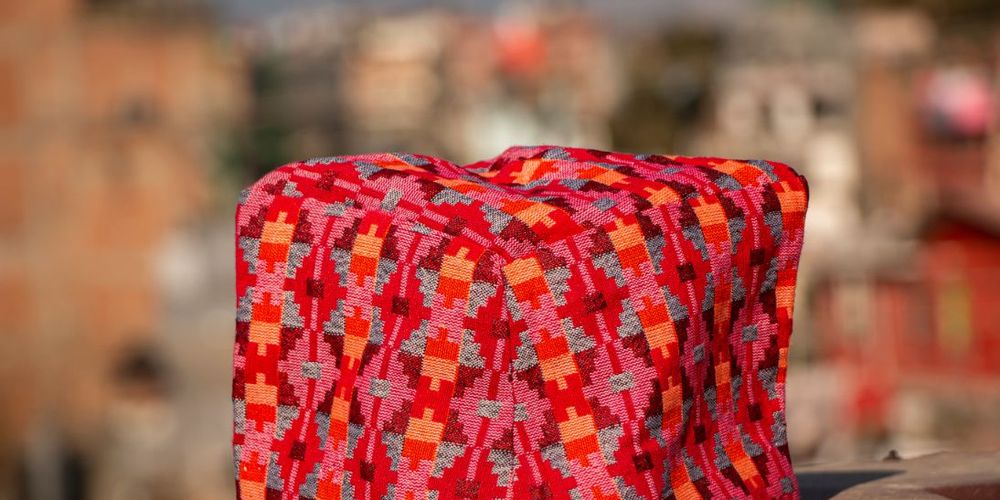
While nationalists celebrate the hat as a symbol of a ‘unified’ Nepal, Madhesis and other marginalised groups regard it as a symbol of oppression and forced assimilation

Features
3 min read
The authorities are finally being forced to address corona-related issues in prisons, but they still remain far too crowded

Features
The Wire
3 min read
Over 300 have been arrested since the government labeled the Maoist Group a criminal outfit earlier this year

COVID19
5 min read
The coronavirus has cut through the democratic facade to show how deep inequality runs in Nepali society

COVID19
News
2 min read
A daily summary of Covid19 related developments that matter

Features
5 min read
Inside Qatar’s deportation centre, migrants detained under woefully harsh conditions

COVID19
Explainers
6 min read
More research into the prevalence and effects of long covid in Nepal is necessary, say doctors.
